







Skip to content
Stronger Shoulders, Brighter Days: Your Spring Wellness GuideMVPT-Logo
Request Appointment
Menu
  • About
    • Our Story
    • Meet Our Executive & Leadership Team
    • Meet Our Managing Partners
    • Newsroom
  • Locations
    • Maine
    • Massachusetts
    • New Hampshire
    • New York
  • Conditions We Treat
  • Services We Provide
  • Patient Resources
    • Insurances We Accept
    • New Patient Forms
    • What to Expect
    • Health Tips
      • Health Blog
      • Newsletters
      • Online Store
    • FAQs
    • Contact Us
  • Pay Now
  • Careers
  • About
    • Our Story
    • Meet Our Executive & Leadership Team
    • Meet Our Managing Partners
    • Newsroom
  • Locations
    • Maine
    • Massachusetts
    • New Hampshire
    • New York
  • Conditions We Treat
  • Services We Provide
  • Patient Resources
    • Insurances We Accept
    • New Patient Forms
    • What to Expect
    • Health Tips
      • Health Blog
      • Newsletters
      • Online Store
    • FAQs
    • Contact Us
  • Pay Now
  • Careers
Stronger Shoulders, Brighter Days: Your Spring Wellness Guide Image

Stronger Shoulders, Brighter Days: Your Spring Wellness Guide

Father carrying child playing outside and laughing.

Understanding Shoulder Anatomy: The Key to Restoring Function

Your shoulders do a lot more than you realize—they help you lift, reach, carry, and even embrace the people you love. Whether you’re tossing a ball with your kids, hoisting a backpack for an outdoor adventure, or simply reaching for your morning coffee, your shoulders are working hard to keep up with your busy life.

But for many people, shoulder pain makes even the most mundane motions—reaching the top shelf, brushing your hair—feel impossible. We rely on our shoulders for so much of what we do on a daily basis. And, the slightest shoulder pain can have a big impact on your life. Before your small shoulder pain turns into a big problem, consider trying physical therapy. Since physical therapists are experts of the musculoskeletal system, they are perfectly qualified to provide medical care at the earliest stages of your pain.

The good news? Addressing shoulder discomfort early with physical therapy can help you regain strength, improve mobility, and prevent minor issues from turning into major setbacks. Let’s explore some common causes of shoulder pain and why early intervention with a physical therapist can keep you moving with ease.

Shoulder Anatomy

Diagram of the anatomy of the shoulder.

Inside Your Shoulder

Your shoulder is one of the most flexible joints in your body, allowing you to lift, reach, and rotate your arm in almost any direction. But with great movement comes great responsibility—because of its mobility, your shoulder depends on strong muscles, ligaments, and tendons to keep it stable and working properly.

At the center of it all is your rotator cuff, a group of four small but powerful muscles (supraspinatus, infraspinatus, subscapularis, and teres minor) that help control movement and keep your shoulder joint secure. These muscles connect your shoulder blade (scapula) to your upper arm bone (humerus), working together like a team to help you move with ease.

Your shoulder is a ball-and-socket joint, meaning the round top of your upper arm bone sits inside a shallow socket in your shoulder blade. This design gives you a wide range of motion—but because the socket is so shallow, your shoulder depends on muscles, ligaments, and tendons for support.

Other key parts of your shoulder include:

  • The clavicle (collarbone), which connects your arm to your body.
  • The acromioclavicular (AC) joint, which helps with shoulder movement.
  • The sternoclavicular joint, which connects your shoulder to your chest.
  • The glenohumeral joint, the main ball-and-socket joint of the shoulder, allowing for a wide range of arm movements.

Because the shoulder is so mobile, it’s also more prone to injuries—whether from overuse, strain, or sudden movement. That’s why keeping your shoulder strong and stable with exercise and physical therapy is essential for staying active and moving comfortably.

Aches, Pains, and Injury… Let’s Find Out Why

Some of the most common causes of shoulder pain include:
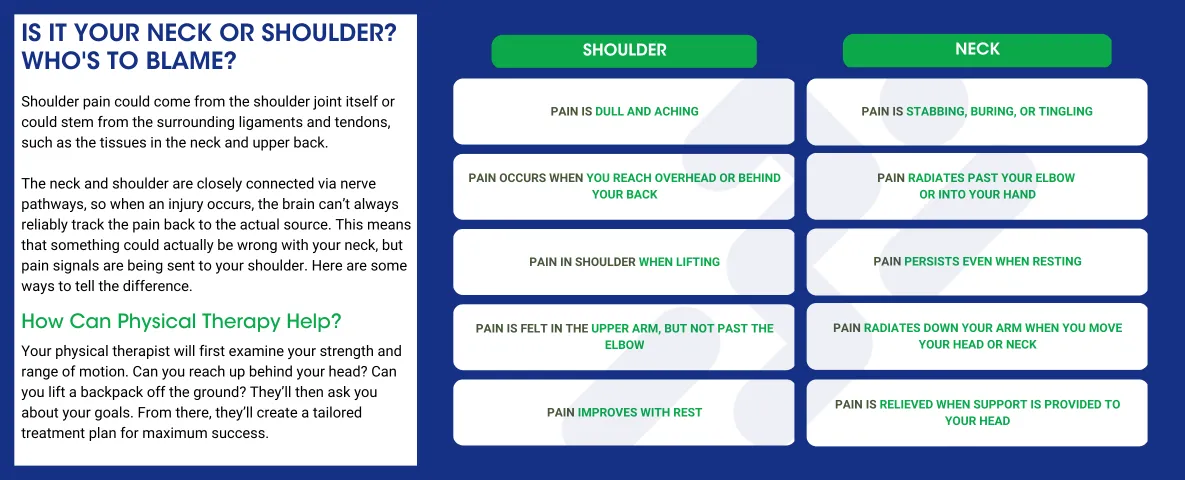
  • Arthritis: Arthritis is an inflammation of the joints and is usually caused by ongoing wear and tear.
  • Bursitis and Tendinitis: Bursas are small sacs filled with fluid that are found in joints. Excessive use of the shoulder can lead to inflammation of the bursa between the rotator cuff and your shoulder blade. Tendons are cords that connect muscle to bone. Although injury can be the result of an accident, tendinitis is considered an overuse injury.
  • Dislocation: This occurs when the head of the upper arm bone comes partially or fully out of the shoulder socket.
  • Fracture: A shoulder fracture can refer to a break in the scapula, clavicle, or top of the humerus.
  • Labral Tear: Labral Tear is an injury to the cartilage in the shoulder joint that can cause instability, discomfort, and difficulty with movement.
  • Frozen Shoulder: Otherwise known as “adhesive capsulitis,” this is a painful dysfunction of the shoulder joint associated with trauma, repetitive injury, and an extremely limited range of motion in the shoulder.
  • Rotator Cuff Injuries: The rotator cuff is actually a group of small muscles and tendons that surround the ball and socket joint, keeping the head of the humerus firmly in place within the shallow socket of the shoulder.
  • Muscle Strain: With many muscles supporting the shoulder allowing for motion of the neck and arm, muscle strains are a common injury resulting from sports injuries and work related duties.
Infographic of what causes shoulder pain.

Physical Therapy: The Earlier, The Better

Don’t wait until your pain is unbearable before you seek treatment! Many people try to ignore the constant aches, twinges, and stiffness. But this could have detrimental consequences. Engaging in early physical therapy, at the onset of your symptoms, can reduce the risk of a more serious condition developing—one that could require a more intense, invasive approach like surgery or prescription pain medications such as opioids.

Say ‘Yes’ To Physical Therapy And ‘Goodbye’ To Pain

Your physical therapist will perform a thorough evaluation, including reviewing your medical history, previous injuries, and measurement of your strength and range of motion. Then, based on your individual goals for recreational activities or work and home duties, they’ll create a tailored treatment plan for success designed specifically for you.

Infographic: a fact about shoulder pain. 1 out of 4 adults have shoulder pain.

What might be included in your treatment plan?

Based on your condition, medical history, stage of recovery, and personal preferences, your therapist may use some of these services during your care:

  • Athletic and kinesio taping
  • Electrical stimulation (Estim)
  • Dry needling
  • Cupping
  • Joint mobilization and stabilization
  • Manual therapy techniques
  • Strengthening exercises
  • Stretching

They’ll also teach you ways to modify your everyday activities to reduce the likelihood of reinjury and provide home exercise programs to maintain your progress long after discharge from care.

With so much to do in your life, don’t let shoulder discomfort hold you back this spring. Whether you’re reaching for new goals or simply reaching overhead without hesitation, physical therapy can help you move with confidence and strength. Take the first step toward better shoulder health—Click the button below to REQUEST AN EVALUATION at your nearest MVPT Physical Therapy location and get back to doing what you love.


Request An Evaluation
Guy excited after finishing a road race.

Exercise Tips To Put Some Spring Back In Your Step

The birds are chirping again, the sun is rising a bit earlier, and the smell of spring is in the air. Warmer temperatures and days filled with more sunlight allow us to shift from indoor activities to nature trails and athletic fields. With eager excitement to break free from the confines of winter, many of us assume we can jump right in where we left off in the fall.

Unfortunately, this is often the perfect recipe for pain and injury!

While all recreational activities pose some risk of injury, you can often reduce these risks with proper preparation and a smarter training plan.

First Thing’s First

The first step in injury prevention is understanding why some injuries occur. Through evaluation and education, medical professionals such as physical therapists can prescribe preventive care plans to minimize risk. Many injuries stem from overuse, muscle imbalance, poor mobility, and a lack of preparation. Physical therapy isn’t simply for recovery. Your physical therapist can play a huge role in identifying precursors to injury to help prevent them before they occur.

The Science of Movement

As the body moves, stress is placed on muscles and tendons, which connect to bones and joints. As force builds, power is developed through muscles functioning at high speed, requiring balanced strength to meet the demands of the moving athlete. Whether running the bases, cruising down steep trails, or sprinting on the turf, the moving body is a complex structure that demands proper care to keep it functioning at its best.

Our bodies change over time, but no matter our age, we face similar challenges when attempting athletic movements and maneuvers we’ve practiced thousands of times. To prevent injury, we have to maintain strength and coordination throughout our lives. That’s where your trusted physical therapist comes in.

Father and son playing baseball together.

Stay Ahead of the Curve with Prevention

Preventing injuries should be a priority for athletes, parents, and coaches. From weekend warriors to seasonal athletes, without proper preparation, participants are prone to developing injuries. Whether treating imbalanced muscle groups or the effects of inadequate recovery from underlying aches and pains, your physical therapist can guide your journey toward optimal performance.

Areas of attention that can be addressed during preventative care:

  • Mobility restrictions and hypermobile concerns
  • Muscular imbalances
  • Overuse tendinitis or sport-specific overuse conditions

Prevention activities should be performed prior to competition. This allows the athlete to participate in targeted exercises, mobility, and functional movements to help avoid sport-specific injuries. These activities can also target weaknesses that are more likely to develop from an individual’s specific body predisposition. A physical therapist will perform a thorough evaluation to discover these predispositions and develop a customized care plan to minimize the likelihood of injuries before they occur.
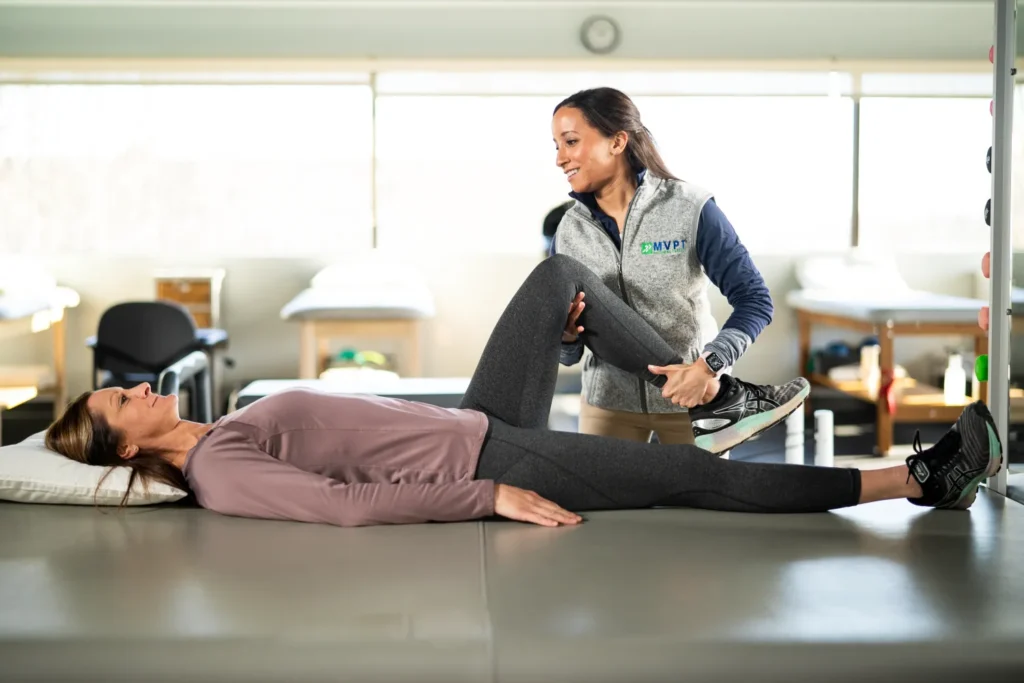
Physical Therapist giving patient care stretching leg at MVPT.

Return To Sport After Injury

When an injury or a sign of injury occurs, physical therapists remain your best partner. You’ll have access to a skilled medical professional trained to assess injuries, evaluate the need for pain management techniques, and design a tailored recovery program. Once recovery is sufficient, they’ll also guide patients toward a safe return to activity, whether for leisurely or competitive purposes.

Spring Ahead of Injury with Preparation and Prevention

With the help of your MVPT Physical Therapy team, you can make the most of your favorite activity by preparing the body for the rigors of movement and competition. As specialists in sport and movement, who is better qualified to help you prepare for the activities you love most? From hitting the links to pounding the pavement, if you’re in motion, MVPT Physical Therapy is the perfect partner to help you achieve optimal health. REQUEST AN EVALUATION TODAY!
Request An Evaluation
Infographic on how to keep moving this spring 2025.
father and child on his shoulders flexing bicep muscle and laughing.

Shoulder Strength & Mobility

Many activities require strong shoulders. From tennis and golf, to gardening and housework, shoulder stability should be a key component of your exercise routine. Vidhi, a Clinic Manager and physical therapist with our affiliate company Bay State Physical Therapy, provides us with some great shoulder exercises.

Professional head shot of Vidhi R. PT, MS, MBA, OCS

Clinic Manager at Bay State Physical Therapy - Randolph
Massachusetts. 
Vidhi is passionate about helping people move and feel their best. She holds a Master’s in Rehabilitation Science (Musculoskeletal) from the University of Pittsburgh and an MBA from the University of the Cumberlands.

Vidhi R., PT, MS, MBA, OCS

Clinic Manager at Bay State Physical Therapy – Randolph

Vidhi is passionate about helping people move and feel their best. She holds a Master’s in Rehabilitation Science (Musculoskeletal) from the University of Pittsburgh and an MBA from the University of the Cumberlands. With a special interest in musculoskeletal and sports injuries, pre- and post-operative rehab, and vestibular therapy, she takes a hands-on, holistic approach to care.

Vidhi uses a hands-on approach and tailors treatments to restore movement and function. She stays current with evidence-based practices and has advanced training in MSK and sports taping, myofascial trigger release, and neurodynamic solutions. Committed to lifelong learning, she continually enhances her skills to provide the best possible care for her patients.

front view of women 90° Internal/External Rotation
back view of women 90° Internal/External Rotation

90° Internal/External Rotation

  • Stand upright holding a resistance band anchored in a door slightly higher than shoulder-height
  • Your arm should be straight out to your side with your shoulder and elbow both at 90-degree angles
  • Maintaining good posture and shoulder blade control, rotate your arm upward from horizontal to vertical, keeping slight tension on the resistance band
  • Your elbow should remain at a 90-degree angle and your upper arm shouldn’t move up or down
  • Repeat for 2 sets of 15 in each direction before switching arms to perform on the opposite side
Sideview od women demonstrating Thread The Needle.

Thread The Needle

  • Position yourself on the floor on your hands and knees
  • Reach one hand under and across your body, allowing your head and shoulders to follow
  • Move your hand back across your body and reach up toward the sky, making sure your head and trunk follow the rotation
  • Ensure your eyes are following the movement of your hand
  • Repeat for 2 sets of 15 in each direction before switching arms to perform on the opposite side
Sideview of women demonstrating Scapular Clocks with resistance band.

Scapular Clocks

  • Stand up straight facing a wall with a resistance band around both hands
  • Place the palms of your hands on the wall at about shoulder-height
  • Hands should be shoulder-width apart with slight tension on the band
  • Keep one hand in place throughout as you move the other hand up and out diagonally to a 1 o’clock position, pausing before returning to the starting position
  • Repeat to all positions of 2, 3, 4 and 5 o’clock
  • Reverse hand position and repeat movements with opposite side from 7 to 12 o’clock
  • Your palms should remain on the wall throughout the movements with your abdominals engaged to protect your core
  • Repeat the series for 2 sets
Sideview of women showing Scap Push Ups

Scap Push Ups

  • Leaning on a countertop or edge of a sturdy couch, position your body with your arms straight and your abdominals engaged
  • As your arms remain straight, allow your shoulder blades to pinch together
  • With shoulder blades pinched, bend at the elbows and slowly lower your body as you perform the lowering portion of a push up
  • Once your elbows reach 90 degrees, return to the starting position by pushing through the heels of your hands to straighten your elbows
  • Continue to engage the pinch between your shoulder blades during this motion
  • Repeat for 2 sets of 15
Front view of women stretching Posterior Cuff Stretch.

Posterior Cuff Stretch

  • Lift one arm up and in front of your body with your elbow flexed at 90 degrees
  • Place the opposite hand on the outside of your elbow and gently hug your arm across your body
  • Hug to the point of a gentle stretch, but not to the point of pain
  • Hold for 10 seconds and repeat 10 times
  • Switch sides and perform on the opposite side of the body

If pain or injury keeps you from being as active as you would like, call any MVPT location! With locations in Maine, New Hampshire and New York, you can find us where you live, work and play! Click the button below to REQUEST AN EVALUATION today!

Request An Evaluation
four adults playing pickle ball outside spring 2025.

Sports Injuries: How To Stay In The Game

Whether kicking a ball on the soccer field or shooting a three-pointer on the basketball court, life’s highs sometimes come with unwanted lows—yep, we’re talking sports injuries. At MVPT Physical Therapy, we’re committed to helping you recover quickly while giving you the tools needed to prevent re-injury. Our highly skilled team of physical therapists focuses on the big picture, ensuring you’re healing and thriving, regaining the strength and mobility needed to step back into action. We will work with you hand-in-hand, cheering you on every step of the way.

Three Common Sports Injuries And How To Care For Them

In the world of sports, a few bumps and bruises are part of the game. Sprains and strains are the most common sports-related injuries. Sprains involve ligaments and soft tissues of the musculoskeletal system that connect bones, stretching too far or tearing. Another common injury, strains, occurs with muscles get overstretched or injured.

As a coach, parent, or participant, it’s essential to recognize the signs and symptoms of athletic injuries. Early-season injuries like ankle sprains, blisters, and strained muscles can hinder a player’s performance and overall enjoyment of the sport. In addition to managing injuries, athletes, especially those growing and developing rapidly during adolescence, must prioritize proper nutrition and quality restorative sleep. You’d be amazed by the impact that rest and quality nutrition, including fruits, veggies, and reduced sugar, can have on inflammation and recovery.

To help you prepare for the upcoming season, here are some tips to help your player(s) stay in motion.

Women in sitting on stairs holding ankle sprain in pain.

Ankle Sprains

Ankle sprains are among the most prevalent sports injuries, and they can happen at any time, especially during the early season when players are still adjusting to their physical demands.

Here’s how to manage musculoskeletal injuries such as ankle sprains effectively:
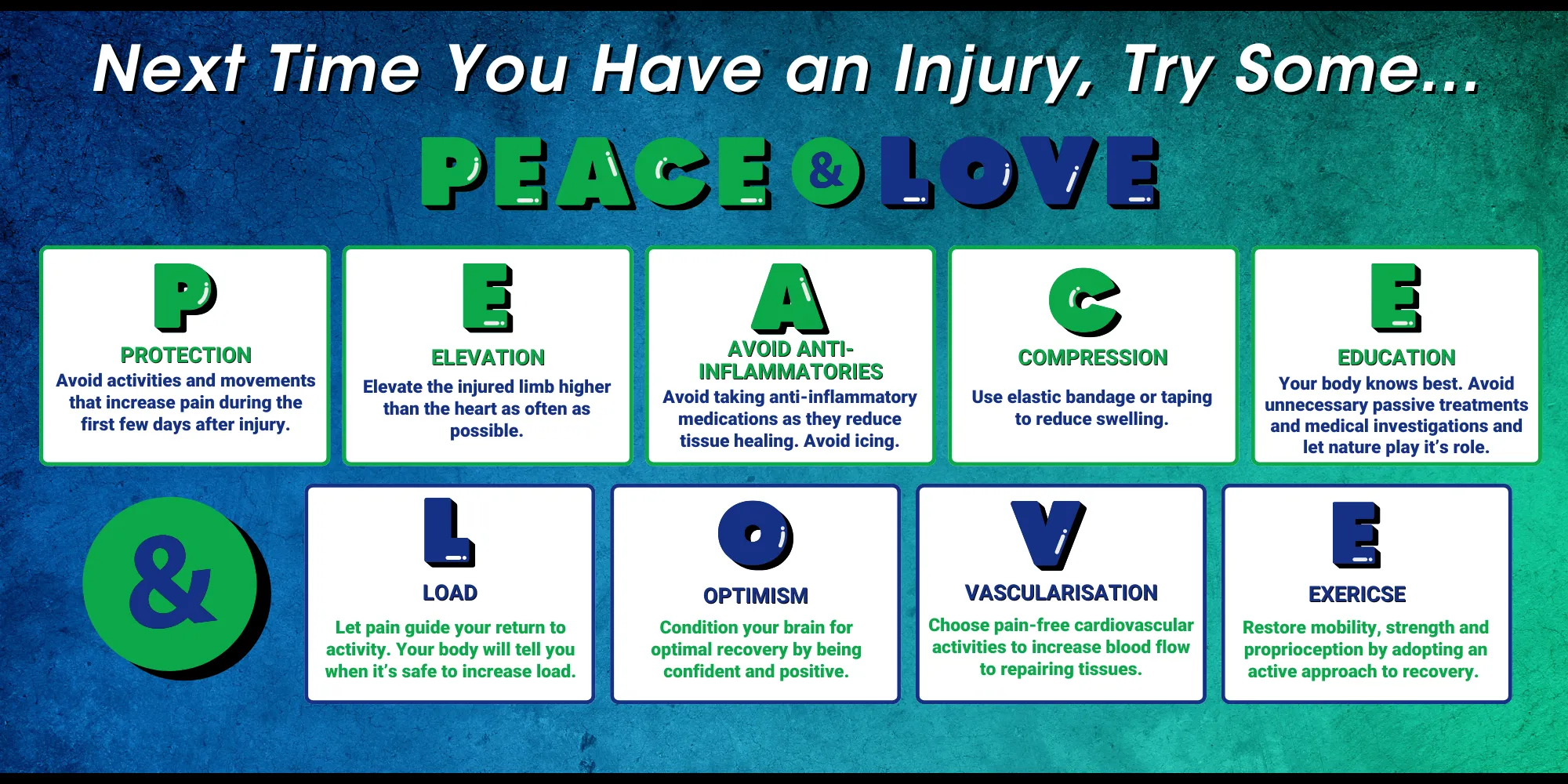
  • Skip the R.I.C.E. and try some ‘P.E.A.C.E. & L.O.V.E.’: While we’ve all heard of R.I.C.E. (Rest, Ice, Compression, Elevation) for managing injuries, there’s a new way of thinking. Here’s what ‘PEACE & LOVE’ means:
  • Gradual Return to Play After an Ankle Sprain: Depending on the severity of the sprain, most athletes can return to training within 2-3 weeks of injury. Pay attention to signs of pain and inflammation and consult your physical therapist or medical provider when needed.
Infographic acronym for the next time you have an injury PEACE & LOVE.

Blisters

Blisters start as ‘hot spots’ due to pressure. Blisters can be incredibly painful and disruptive to athletes, causing discomfort during training and games. Here are some tips to help you address and prevent blisters:

  • Proper Footwear: Ensure athletes wear well-fitting footwear with moisture-wicking socks to reduce friction.
  • Blister Prevention & Management: Keep the area clean by washing it with antibacterial soap and covering it with a soft dressing to cushion and protect it.
  • Time Off When Necessary: When cared for effectively, blisters can heal in a few days. A short break from sport can speed up healing.

Strained Muscles

Strained muscles are common in youth sports, often due to overuse, sudden movements, or inadequate warm-ups. Here’s how to deal with strained muscles effectively:

  • More P.E.A.C.E. & L.O.V.E. As discussed in managing ankle sprains, ‘P.E.A.C.E. & L.O.V.E.’ is the best advice. What else can you do? Get creative with activities; consider keeping up fitness levels by choosing activities that don’t involve or stress the injury. Some options might include using a stationary or upper-body bike to engage uninjured muscles and increase heart pumping. This can actually lower inflammation for a quicker recovery!
  • Stretching & Strengthening: As healing occurs, gentle movements and stretching exercises can begin. Once the pain subsides, introduce strengthening exercises. Want to learn more? Ask your physical therapist or download our injury prevention guide!
  • Return to Action After Muscle Strain: The timeline for returning to action will vary from player to player. A cautious approach to returning to sport is the best way to avoid a more significant injury.

Enjoy the Game You Love

Early season injuries can be challenging for athletes, regardless of age. However, we all play a role in managing them when they do occur. With proper guidance and care, these injuries can be effectively managed, and players can return to the track, diamond, or field stronger and more resilient. Click the button below to REQUEST AN EVALUATION today!

Request An Evaluation

RECLAIM THE ACTIVE LIFE YOU DESIRE
Request Your Evaluation Today!

This field is for validation purposes and should be left unchanged.
MM slash DD slash YYYY

Recent Newsletters

Strong Arms. Better Health. Stronger You.

Strong Arms. Better Health. Stronger You.

Focused on the Future: Physical Therapy as Preventative Care

Focused on the Future: Physical Therapy as Preventative Care

Stronger by Spring: Prepare, Prevent, and Keep Moving Forward

Stronger by Spring: Prepare, Prevent, and Keep Moving Forward

Building Strength and Stability to Support the Year Ahead

Building Strength and Stability to Support the Year Ahead

Move Better. Feel Better. Live Better.

Our physical therapy team is here to support your goals.
Request an appointment and we’ll help you get back to doing what you love.

Request Appointment

Subscribe To Our Monthly Newsletter

Get monthly tips, resources, and updates to help you move, feel, and live better delivered right to your inbox.

About
  • Our Story
  • Meet Our Executive & Leadership Team
  • Meet Our Managing Partners
  • Newsroom
Locations
  • Massachusetts
  • Rhode Island
  • Maine
  • New Hampshire
  • New York
Conditions We Treat
  • Hip & Leg Pain
  • Knee Pain
  • Neck Pain
  • Sciatica
  • View All Conditions
Services We Provide
  • Physical Therapy
  • Sports PT
  • Pediatric PT
  • Occupational Therapy
Patient Center
  • New Patient Forms
  • What to Expect
  • Health Blog
  • Newsletters
  • Pay Now
  • Careers
  • Contact Us
  • facebook
  • instagram
  • linkedin

Bay State Physical Therapy is not affiliated with Baystate Health, Inc.

© MVPT Physical Therapy 2026 | Sitemap | Privacy Policy | Terms of Use

Practice Promotions
Website powered by Practice Promotions Marketing
  • facebook
  • instagram
  • linkedin