






You wake up, and before you even move, you already know how your day will feel. Your joints are stiff, your knees ache, and standing up makes you hesitate. You push through the discomfort, hoping it will ease, but even simple movements – climbing stairs, bending down, or getting dressed – feel harder than they should.
Maybe you’ve started avoiding activities altogether. Perhaps the hardest part isn’t just the pain – it’s the feeling of losing independence. You’ve heard people say, “That’s just part of getting older.” But is it?
More than 32 million Americans live with osteoarthritis (OA), a degenerative joint condition that causes pain and stiffness. You may think your only options are medication or slowing down your lifestyle to accommodate your pain.
But here’s something you need to know: Avoiding movement can actually make arthritis worse.
When you stop moving, muscles weaken, joints stiffen, and balance declines. The less you move, the harder movement becomes. But there’s another way.
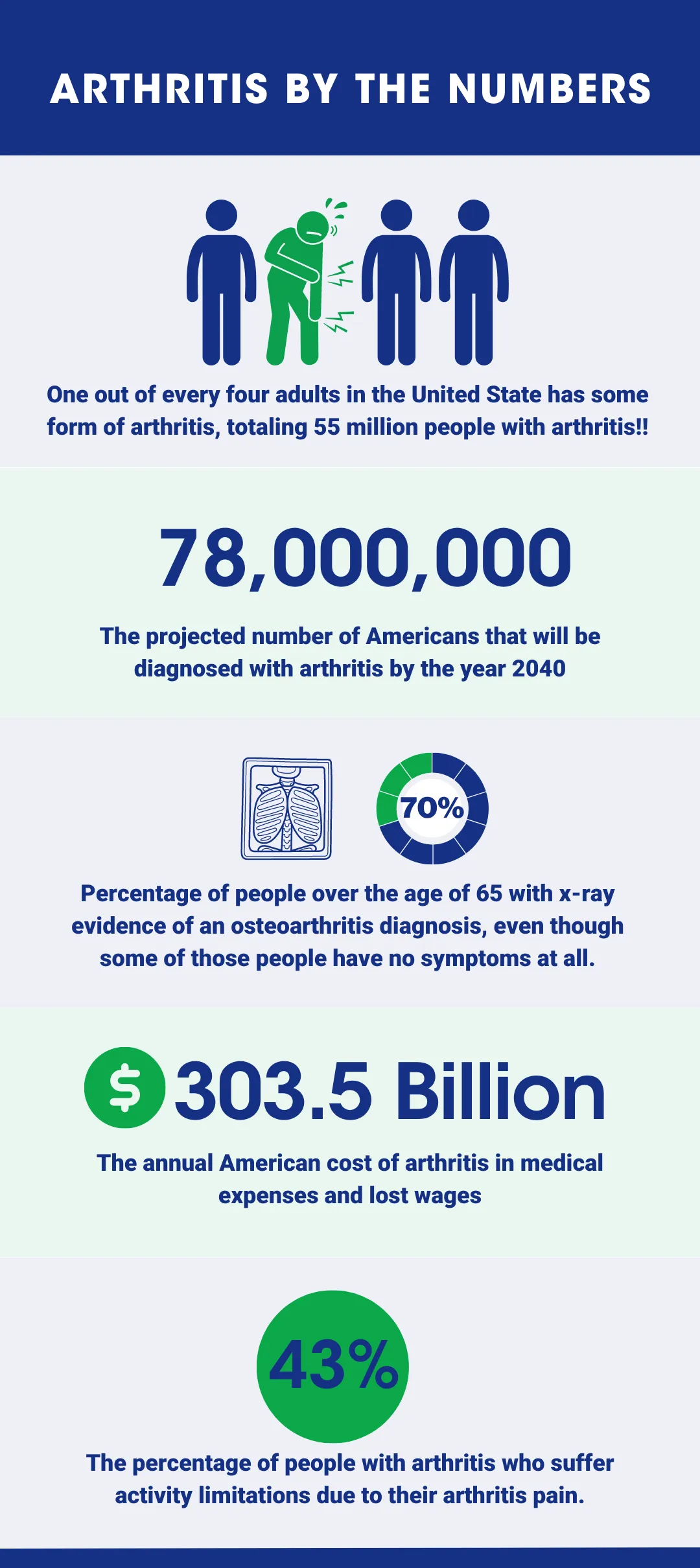
Did you know that 1 in 4 adults in the United States—more than 55 million people—are living with some form of arthritis? That number is expected to rise to 78 million by 2040. Among adults over 65, 70% show signs of osteoarthritis on x-rays, even if they don’t feel any symptoms. Arthritis isn’t just painful—it’s costly too, with an estimated $303.5 billion spent each year on medical care and lost wages. Even more concerning, 43% of people with arthritis report limitations in their daily activities because of their pain. If you’re experiencing joint stiffness or discomfort, don’t wait—early care can make a big difference.
Now, imagine waking up ready to move. Instead of wincing as you get out of bed, you step forward with confidence. Stairs no longer feel like an uphill battle, and you can pick up your grandkids without that familiar ache.
You feel stronger. More stable. More in control.
This isn’t just wishful thinking – it’s what happens when you use movement as medicine and make physical therapy part of your routine.
At MVPT Physical Therapy, we help people like you:
✅ Strengthen muscles to support and stabilize joints
✅ Reduce stiffness and improve flexibility
✅ Improve balance to prevent falls
✅ Restore mobility, so everyday movements feel easier
✅ Minimize inflammation and joint pain through guided, safe exercises
The key to managing arthritis isn’t to stop moving – it’s to move the right way. That’s where physical therapy comes in.
💡 Myth #1: Exercise Will Make Arthritis Worse
Truth: Low-impact movement relieves arthritis symptoms. Physical therapy focuses on gentle, targeted exercises that strengthen joints safely.
💡 Myth #2: If You Have Osteoarthritis, Surgery Is Your Only Option
Truth: Many OA patients manage pain without surgery. Strengthening muscles around joints can delay or prevent the need for surgery.
💡 Myth #3: The More You Rest, The Better Your Joints Will Feel
Truth: Inactivity worsens arthritis. Stiffness and weakness increase without movement. Physical therapy helps you stay mobile and independent.
Many people believe physical therapy is only for injury recovery. But it’s one of the best, most effective ways to manage arthritis without medication.
At MVPT Physical Therapy, our licensed therapists specialize in:
➡ Personalized Exercise Programs – Strengthening the right muscles to reduce joint strain
➡ Manual Therapy – Hands-on techniques to improve mobility and relieve stiffness
➡ Balance & Fall Prevention – Helping you move with confidence and stability
➡ Education & Pain Management – Teaching you how to modify activities to protect your joints
Whether you want to return to gardening, playing with your grandkids, walking with friends, or simply moving with ease, physical therapy can help you get there.

Starting physical therapy is simple and stress-free. At your first session, you’ll:
We’ll also help you understand your condition better so you can confidently manage arthritis in your daily life.

At MVPT Physical Therapy, your care goes beyond exercises – it’s a partnership. Your physical therapist takes the time to understand your medical history, your challenges, and your goals. Whether you’re looking to return to hiking, keep up with your grandchildren, or move through daily life with ease, your treatment plan is built around you.
Through a one-on-one evaluation, we tailor every stretch, mobility exercise, and strengthening movement to fit your body’s needs. Your physical therapist isn’t just guiding you through exercises – they’re working alongside you, helping you move better so you can get back to doing the things that matter most.
✅ It’s Customized for You – Your plan is built around your body, your pain, and your goals.
✅ It’s Proven to Reduce Pain – Research shows that movement and exercise are the best non-drug treatments for arthritis.
✅ It Helps You Stay Independent – The stronger and more mobile you are, the less reliant you’ll be on medication, mobility aids, or assistance.
✅ It’s a Long-Term Solution – Unlike medication that masks pain, physical therapy addresses the root cause, improving function for years to come.
With expert guidance, personalized care, and a focus on long-term mobility, physical therapy empowers you to move with confidence – so you can do not just what you need to do, but what you love to do.

Arthritis may be a part of your life, but it doesn’t have to control it. With the proper care, you can keep doing the things you love – without relying on medication or fearing movement.
Your future self will thank you for taking action today. Request an evaluation at MVPT Physical Therapy and return to movement and the life you’ve missed.
Your path to better movement starts now. Let’s get you there together!

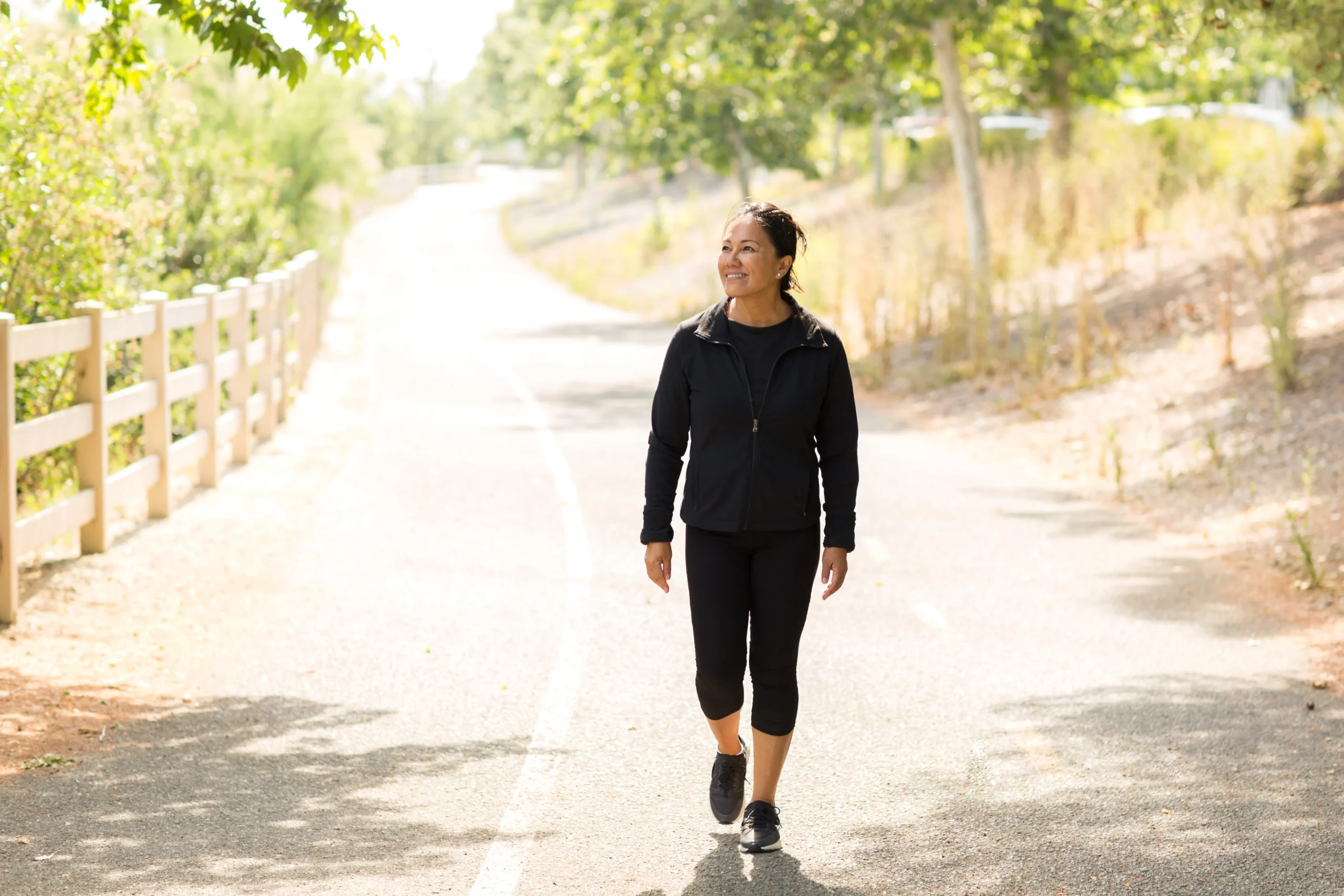
Walking is the most popular form of exercise in the United States. It’s easy, free, and can be done just about anywhere. If you’re ready to commit to a walking routine, here are some physical therapist-approved tips to help you stride to success.
When it comes to starting an exercise routine, preparation is key. Speak with your physical therapist to create a routine that could include dynamic stretches and tailored movements to get your body ready before you hit the road. Above all, if you’re currently experiencing any aches or pains, consult with your physical therapist or your doctor to address these issues before beginning your routine.
Ensure you have the proper support for your feet. Wear comfortable and supportive shoes such as sneakers, hiking shoes, or cross-trainers. It’s best to avoid wearing flip-flops, flats, or dress shoes.
If you’re new to walking, start light! Your body will need to adjust to the new exercise. Too much walking early on can lead to aches and pains. Break down your long-term goal into bite-sized chunks to encourage success. For instance, start walking 30 minutes 4 to 5 days per week.
Once you’ve set your goals, plan your routine. Sit down and schedule a time to exercise. Don’t procrastinate and put it off until later. Your health is a priority!
Variety is the spice of life! Switch up where you walk, the length of time, and who you walk with. The best part about walking is you can do it anywhere. Many high schools have rubberized tracks open to the public, which can be a great spot to meet other walking enthusiasts.
According to the American Heart Association, walking at a lively pace at least 150 minutes a week (i.e. 30 minutes, 5 days per week) can help you:
If 150 minutes sounds like a lot, don’t worry, it’s easy to fit in a few minutes of walking several times a day. Start with 10-minute walks in the morning and again at lunch or before dinner. Before you know it, you’ll build up your time and exercise capacity. Just like that, you’ll be reaching your goals and ready to set new ones! Good health is a marathon, not a sprint—so keep at it and have some fun along the way.
If pain or injury limits your ability to be as active as you’d like, just call MVPT Physical Therapy or click the button below to request an appointment.



While many of us think we need to throw weights around and break a heavy sweat to get our bodies moving, the “no pain, no gain” mentality is a thing of the past! In fact, to prime your body for more rigorous activities, tai chi may be just what you need!
Tai chi is often described as “medication in motion” because of the restorative benefits for mind and body, and who couldn’t use a little help there? We have plenty of time ahead to crush records, but for now, let’s start with this gentle form of exercise to build a bridge to strength, flexibility, and balance.

Nathan (‘Nate’) has been a licensed Physical Therapist Assistant since 2014, helping patients recover from orthopedic injuries, post-surgical procedures, and improve balance to prevent falls. His treatment approach combines hands-on techniques—like soft tissue and joint mobilizations—with therapeutic exercise and patient education, empowering individuals to take control of their recovery at home.
Nate has expanded his expertise through continuing education, earning certifications in the Level 1 Graston Technique and becoming a certified Tai Chi for Rehabilitation Instructor. He incorporates the principles of Tai Chi into patient care to promote balance, flexibility, and mindful movement.
Outside the clinic, Nate teaches both Kempo Karate and Tai Chi to students of all ages. He is passionate about helping people move with purpose—whether for self-defense or healing—believing that mindful movement can improve both physical health and mental clarity.

Spinal extension and shoulder movement that translates to throwing and overhead sport actions.

Clear application to a tennis movement pattern, mimicking the action before a tennis serve with the pulling arm. The legs are working a functional squat movement just wider than the average stance.

The functional squat pattern has application in many sports. In racquet sports or lacrosse, you might see this movement done bilaterally because the athletes are holding their racquet/sticks with one or both hands.

This has a strong swimming application with the arms and is a great spinal rotation stretch. Spinal rotation is important for any sport but has significant application in tennis, baseball, and rowing activities.
Mind-body exercises, such as tai chi and yoga, have been gaining popularity over the past few decades. This isn’t surprising, given the increasing number of studies on the positive effects of these gentler forms of exercise. There’s even evidence that tai chi may help you live a longer, more vital life. With that in mind, breathe in the good air, exhale the bad air, and prepare your mind and body for whatever activities lie ahead!
If pain or injury limits your ability to be as active as you would like, call your nearest MVPT Physical Therapy location to schedule an evaluation!


Osteoporosis is a common condition affecting 55% of Americans over the age of 50, with women making up 80% of diagnosed cases. It weakens bones, increasing the risk of fractures, often with little to no warning. However, osteoporosis doesn’t have to mean giving up the activities you love. With the right care, you can stay active, strong, and independent.
If you’ve been diagnosed with osteoporosis or osteopenia (a precursor to osteoporosis), you can take steps to maintain bone health. Physical therapy, weight-bearing exercises, and proper posture can help strengthen bones, improve balance, and reduce the risk of fractures.
Osteoporosis is often called a “silent disease” because bone loss occurs without noticeable symptoms. Many people are unaware they have osteoporosis until a fall or minor stress causes a fracture—often in the hip, wrist, or spine. Some may experience back pain or a gradual loss of height, but in most cases, osteoporosis is only diagnosed after a break occurs.
For individuals with advanced osteoporosis, even everyday activities like bending, lifting, or coughing can lead to fractures. That’s why early detection and proactive care are essential.
Osteoporosis occurs when bone density decreases, making bones weaker and more prone to fractures. The Bone Health and Osteoporosis Foundation (BHOF) identifies two categories of risk factors:
Some factors that increase the risk of osteoporosis are beyond your control, including:
🔹 Age – The risk increases after age 50
🔹 Gender – Women are more likely to develop osteoporosis
🔹 Family History – If close relatives have osteoporosis, your risk is higher
🔹 Body Type – Those with a smaller frame or lower body weight are more prone to bone loss
🔹 Previous Fractures or Height Loss – A history of fractures or a decrease in height may indicate weakened bones
While you can’t change your age or genetics, you can take steps to protect your bone health!
✅ Stay Active – Regular weight-bearing and resistance exercises keep bones strong
✅ Maintain a Healthy Diet – Eat foods rich in calcium and vitamin D to support bone density
✅ Choose Nutrient-Dense Foods – A diet high in fruits, vegetables, and lean proteins promotes bone health
✅ Limit Sodium, Caffeine, and Alcohol – High intake can interfere with calcium absorption
✅ Monitor Your Weight – Maintaining a healthy weight reduces the risk of fractures
Physical therapy plays a vital role in preventing fractures and improving the quality of life for people with osteoporosis. The BHOF guidelines recommend physical therapy to:
🟢 Reduce disability and improve mobility
🟢 Strengthen muscles to support bones
🟢 Enhance balance and coordination to prevent falls
🟢 Promote safe, proper posture to reduce spinal fractures
Osteoporosis can make everyday activities feel uncertain, but physical therapy provides a proactive way to maintain strength, stability, and confidence in movement. By incorporating targeted exercises and movement strategies, physical therapy helps prevent fractures, improve posture, and keep you active while reducing your risk of injury.
When you begin physical therapy for osteoporosis, your therapist will evaluate your strength, mobility, balance, and posture to create a program that fits your needs. Your sessions may include:
✔ Gentle Weight-Bearing Exercises – Walking, stair climbing, and light resistance training to improve bone density
✔ Core Strengthening Workouts – Engaging the core muscles to support the spine and reduce fracture risk
✔ Flexibility & Stretching Exercises – Keeping muscles long and flexible to prevent stiffness and improve mobility
✔ Fall Prevention Strategies – Improving balance and coordination to lower the likelihood of falls
✔ Posture & Body Mechanics Training – Learning proper movement patterns to avoid excess strain on fragile bones
A diagnosis of osteoporosis doesn’t have to define your future. With the right approach, you can stay active, build strength, and reduce your risk of fractures. Physical therapy is a safe, non-medication-based way to improve bone health and enhance mobility.
At MVPT Physical Therapy, we work closely with your healthcare team to provide a comprehensive approach to osteoporosis care. If you’ve been diagnosed with osteoporosis or osteopenia, don’t wait—take a proactive step to protect your health today! Schedule an evaluation today, and have a stronger tomorrow.