








A little stiffness after sleeping in an unusual position or spending hours at a desk is easy to brush off. You may roll your shoulders, take an over-the-counter medication, or assume the discomfort will settle down on its own. Often, it does. When the same ache returns day after day, however, your body may be telling you that it needs more than time.
Neck pain frequently builds little by little. At first, you may only notice it when turning to back out of a parking space or looking up toward a high shelf. Later, it may become harder to get comfortable at night, work at your computer, or make it through a long drive without feeling stiff.
Those early changes matter. Taking action while symptoms are still manageable can help you understand what is happening and keep neck pain from taking up more space in your life.

There is no single way that neck pain begins. It may feel like an ache across your shoulders, a sharp sensation during one movement, or tension near the base of your skull. Some people notice that their neck feels tired by the end of the day. Others realize they have slowly stopped turning their head as far as they once did.
Pay attention if you experience:
These symptoms do not necessarily point to a serious problem. They do suggest that it may be time to look more closely at what is contributing, particularly if the symptoms are becoming more frequent or limiting your normal activities..


Sometimes the clearest sign that you need help is not the level of pain. It is the number of adjustments you have started making because of it.
Maybe you sit differently during meetings because one position becomes uncomfortable. You may take more breaks from your computer, lose focus as the tension builds, or finish the workday with a headache. Tasks that once felt routine can begin requiring more effort.
Sleep can suffer too. It may take longer to find a comfortable position, or you may wake whenever you roll over. Starting the morning tired and stiff can make the rest of the day feel harder before it has even begun.
Neck movement is also essential for safe, confident driving. Checking a blind spot, backing out of a driveway, or sitting through a holiday road trip can become uncomfortable when turning your head is limited. You may find yourself moving your entire body instead of your neck or avoiding longer trips altogether.
Neck pain can gradually affect exercise, household projects, hobbies, and time with the people you care about. When you begin planning around discomfort, waiting for it to disappear may no longer be the best plan.
If neck pain has continued for more than a few days, keeps coming back, or is changing your routine, a physical therapy evaluation can provide useful answers.
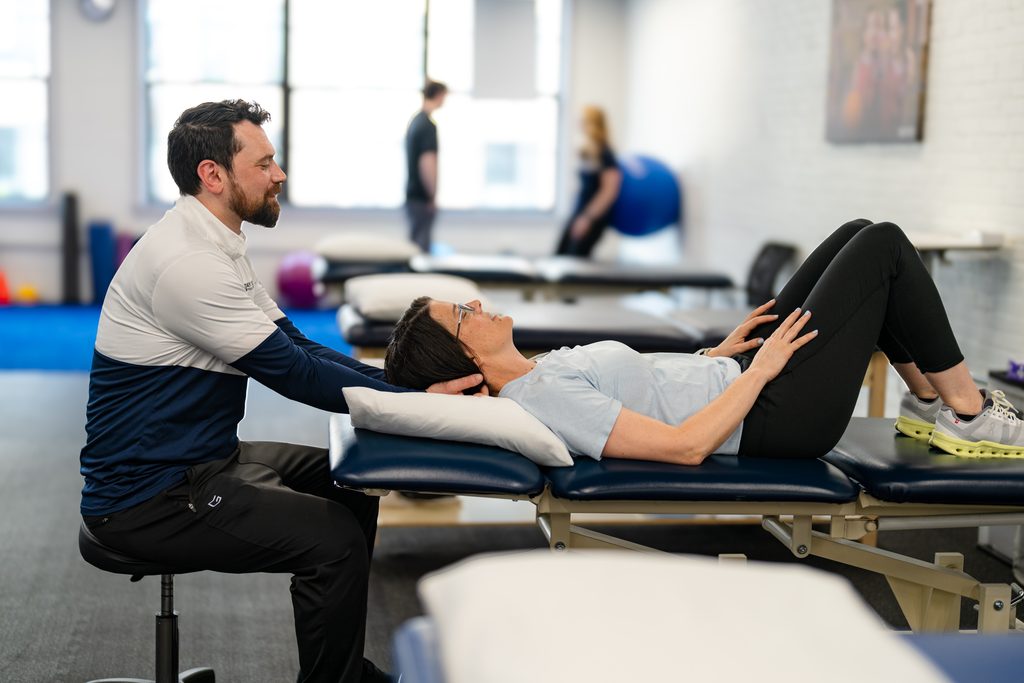
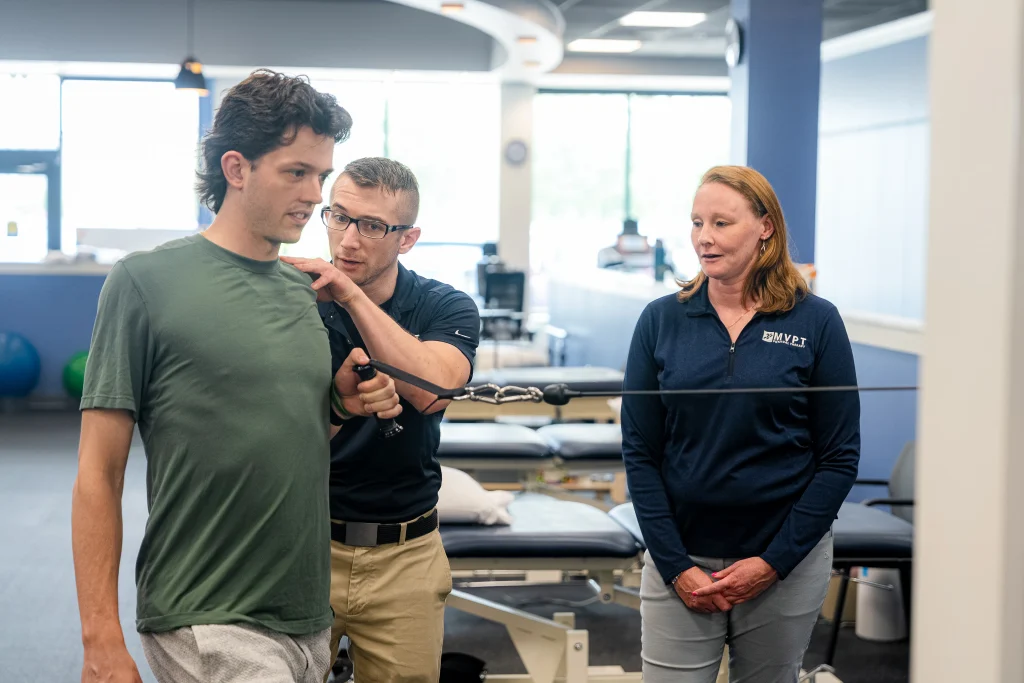
Your MVPT physical therapist will listen to how your symptoms began and what they are preventing you from doing comfortably. They will assess your movement, strength, and the surrounding areas that may be involved. Your work setup, sleeping habits, exercise routine, and other daily demands may also offer important clues.
Your treatment plan will reflect your findings and goals. It may include hands-on care, mobility and strengthening exercises, and practical recommendations for work, sleep, driving, or device use. Just as importantly, your therapist can help you understand which activities are safe to continue and how to build confidence in your movement again.
You do not need to wait for severe pain before asking for help. Addressing the problem earlier can help you make informed changes before avoiding movement becomes part of your routine.
Depending on your state and insurance plan, you may be able to begin physical therapy without first obtaining a physician referral. Contact your nearest MVPT Physical Therapy clinic, and our team can help you understand your options.

November often feels like the starting line for the busiest part of the year. Work deadlines, family gatherings, travel, shopping, and celebrations can quickly push your own needs to the bottom of the list.
If neck pain is already affecting your sleep, work, driving, or ability to stay active, do not automatically put it off until January. You have already paid for your health insurance benefits, so do not let them go unused. Many insurance plans reset at the end of the year, and benefits available now may expire when the new plan year begins.
Starting physical therapy now gives you time to improve your movement, build strength, and learn strategies that can help before the holiday season reaches its peak.
Schedule an evaluation with MVPT Physical Therapy today. Take action now so you can be moving better, feeling better, and living better throughout the holidays and into the new year.


Screens help us work, connect, shop, plan, and relax. That can mean moving from a work computer to a phone and then to a television or tablet without realizing how much of the day has been spent looking at a screen.
The holidays can add even more screen time. You may be comparing gifts online, checking travel details, joining family video calls, or following recipes from your phone. The issue is not the device itself. Discomfort is more likely to build when your body stays in one position for too long.

“Tech neck” is an informal name for the stiffness or soreness some people notice after extended phone, tablet, or computer use. Looking down for a long time or leaning toward a screen asks the muscles around your neck and upper back to maintain the same position.
You might notice tension across your shoulders, an ache near the base of your skull, or difficulty turning your head after a long period online. A headache may also appear as the day continues.
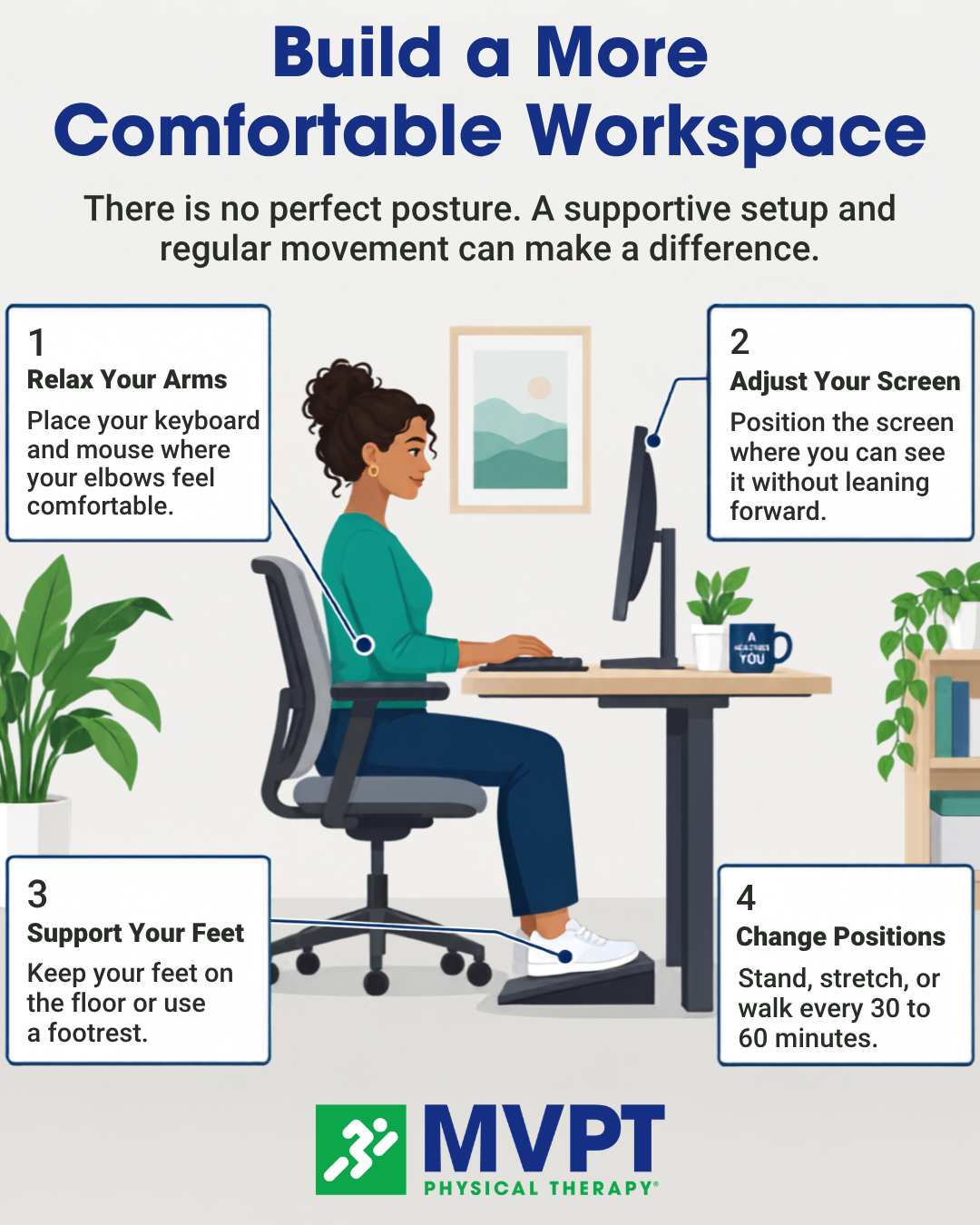
You do not need to chase perfect posture to make a difference. Bodies are meant to change positions. A comfortable setup combined with regular movement is more realistic than trying to sit exactly the same way all day.
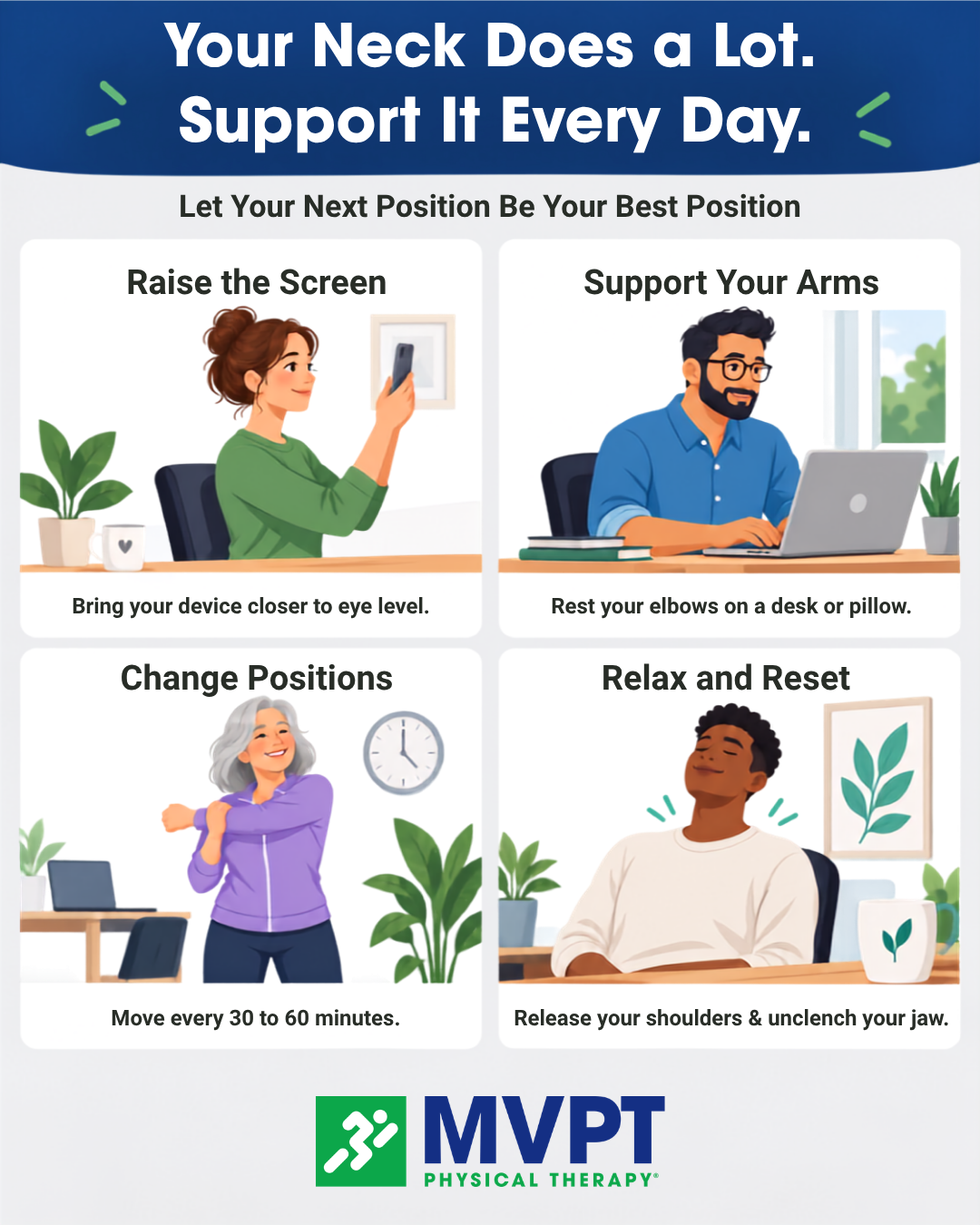
Bring your phone closer to eye level instead of dropping your head toward it. If your arms tire, support your elbows on a desk, table, or pillow.
At a computer, position the monitor so you can read comfortably without leaning forward. Increase the text size if you find yourself moving closer to the screen. Place frequently used items within reach so you are not repeatedly twisting or reaching from an awkward position.
Long periods of concentration can make an hour feel like a few minutes. Use a calendar reminder, phone alarm, or natural stopping point to prompt you to move every 30 to 60 minutes.
Stand up while taking a call. Walk to refill your water. Roll your shoulders or gently turn your head after finishing an email. These breaks do not need to interrupt your day. A short change in position is often enough to break up a long stretch of sitting.
The same idea works at home. Move between episodes of a show, stand during part of a video call, or put your phone down while waiting for a page to load.
Your desk may not be the only place contributing to neck tension. Tablets held in your lap, phones used in bed, and time spent on the couch with your head propped at an angle can all keep your neck in one position longer than expected.
Support the device with a pillow or firm surface and move it closer to your natural line of sight. During holiday travel, passengers can raise their devices and adjust positions regularly. Take opportunities to walk or stretch when it is safe and permitted.
Mild stiffness may settle after you get up and move. If the discomfort returns regularly, interrupts sleep, affects work, or makes turning your head difficult, speak with a physical therapist. Persistent numbness, tingling, or weakness in an arm or hand should also be discussed with a medical professional.
Your daily technology habits do not need to leave you uncomfortable. A better screen position, more frequent movement, and attention to early symptoms can help you respond before tension becomes a regular part of the day.
If neck discomfort is interfering with work, sleep, driving, or the activities you enjoy, request an appointment with MVPT Physical Therapy. We will help you understand what may be contributing and build a plan around the way you live and move.





The trip to a holiday gathering can leave you feeling worn out before the celebration begins. Traffic may keep you behind the wheel longer than expected. A crowded flight can make changing positions difficult. On a train, it is easy to spend the journey leaning over a phone, book, or laptop.
After a few hours, your shoulders may feel tense, your neck may be stiff, and your hips may object when you finally stand. Travel limits the natural movement that normally happens throughout the day. Unfamiliar seats, heavy bags, and the pressure of keeping to a schedule can add to the strain.
Comfort does not depend on holding one ideal position for the entire trip. It comes from giving your body variety. Shifting in your seat, relaxing your shoulders, walking when possible, or stretching at a safe stop can help break up prolonged sitting.
Choose clothing that allows you to move comfortably. A small pillow or rolled towel may provide extra support during the trip. Keep water and frequently used items where you can reach them without repeated twisting.
The following movements can help loosen the neck, shoulders, back, and hips during or after travel. Seated exercises are appropriate for passengers when space allows. Save standing stretches for a rest area, airport terminal, train station, or your destination. Never stretch or exercise while driving.

This month’s travel stretches are presented by Dr. Jackie Hansen, a chiropractor at MCR Chiropractic in Pembroke, Massachusetts, located alongside Bay State Physical Therapy.
A Massachusetts native raised on Cape Cod, Dr. Jackie earned her Bachelor of Health Science degree from the University of Hartford and her Doctor of Chiropractic degree from Northeast College of Health Sciences.
Her interest in chiropractic care began through her own experience as a competitive gymnast. After seeing how chiropractic care helped her recover from injuries and return to the sport she loved, she knew she wanted to provide that same support to others.
“Holiday travel often means spending more time sitting and less time moving. Taking a few minutes to change positions, stretch, and walk when it is safe can help you arrive feeling more comfortable and ready to enjoy time with the people you traveled to see.”
Dr. Jackie has additional training in sports and human performance, custom stabilizing orthotics, nutrition, and instrument-assisted soft tissue therapy. She works with patients from many different backgrounds and uses education, individualized care, and a range of hands-on techniques to help them move and feel their best.

What is it?
Relieve neck tension and activate/ strengthen anterior neck muscles
How to do it!


What is it?
Relieve upper back pain/ tension, strengthen muscles between the shoulder blades, and improve posture
How to do it!


What is it?
Improve hip/knee/leg flexibility posture and reduce leg tension
How to do it!


What is it?
Relieve lower back discomfort and improve lumbar stability
How to do it!


What is it?
Reduce discomfort in the lower back/ hip/ groin region and improve posture
How to do it!
Movement during a long trip does not need to be complicated. Adjust your position before stiffness builds, walk when it is safe, and use these stretches to help your body recover from prolonged sitting.
If neck, shoulder, or back discomfort follows you home, schedule an evaluation with MVPT Physical Therapy. Our team can help you move more comfortably and stay active through the season.


Some headaches make concentration difficult. Others bring enough pressure, throbbing, or sensitivity to derail the entire day. A migraine may force you to step away from work, cancel plans, or find a dark and quiet room until the symptoms pass.
When these episodes happen regularly, life can begin revolving around the possibility of the next one. You may hesitate to make plans, worry about driving, or struggle to keep up with responsibilities at home and work. Even on a symptom-free day, the uncertainty can remain.
Headaches and migraines are not all the same. Learning to describe what you experience can help you and your healthcare providers decide what support makes sense.


Tension-type headaches are often described as pressure or a band tightening around the head. They can occur on both sides and may be accompanied by tightness across the neck and shoulders. Stress, poor sleep, extended screen use, and prolonged positioning can contribute.
Cervicogenic headaches are connected to a problem involving the neck. Symptoms may begin near the base of the skull and move toward the temple, forehead, or area behind one eye. Limited neck movement or stiffness often occurs at the same time, and certain positions may increase the discomfort.
Migraines are a neurological condition and can involve much more than head pain. Symptoms may include pulsing or throbbing, nausea, changes in vision, and sensitivity to light, sound, or smells. Some people experience an aura before a migraine, although many do not.
It is possible to experience migraines along with neck pain or muscle tension. Physical therapy can address these musculoskeletal concerns as part of a larger care plan, but migraine management may also require treatment from a physician or another healthcare provider.
A simple symptom record can reveal details that are difficult to remember after an episode passes. Note when the symptoms started, how long they lasted, where you felt them, and what was happening beforehand.
Other useful details include:
Patterns may not appear immediately. Over time, this information can give your healthcare team a clearer view of your experience and help guide decisions about care.


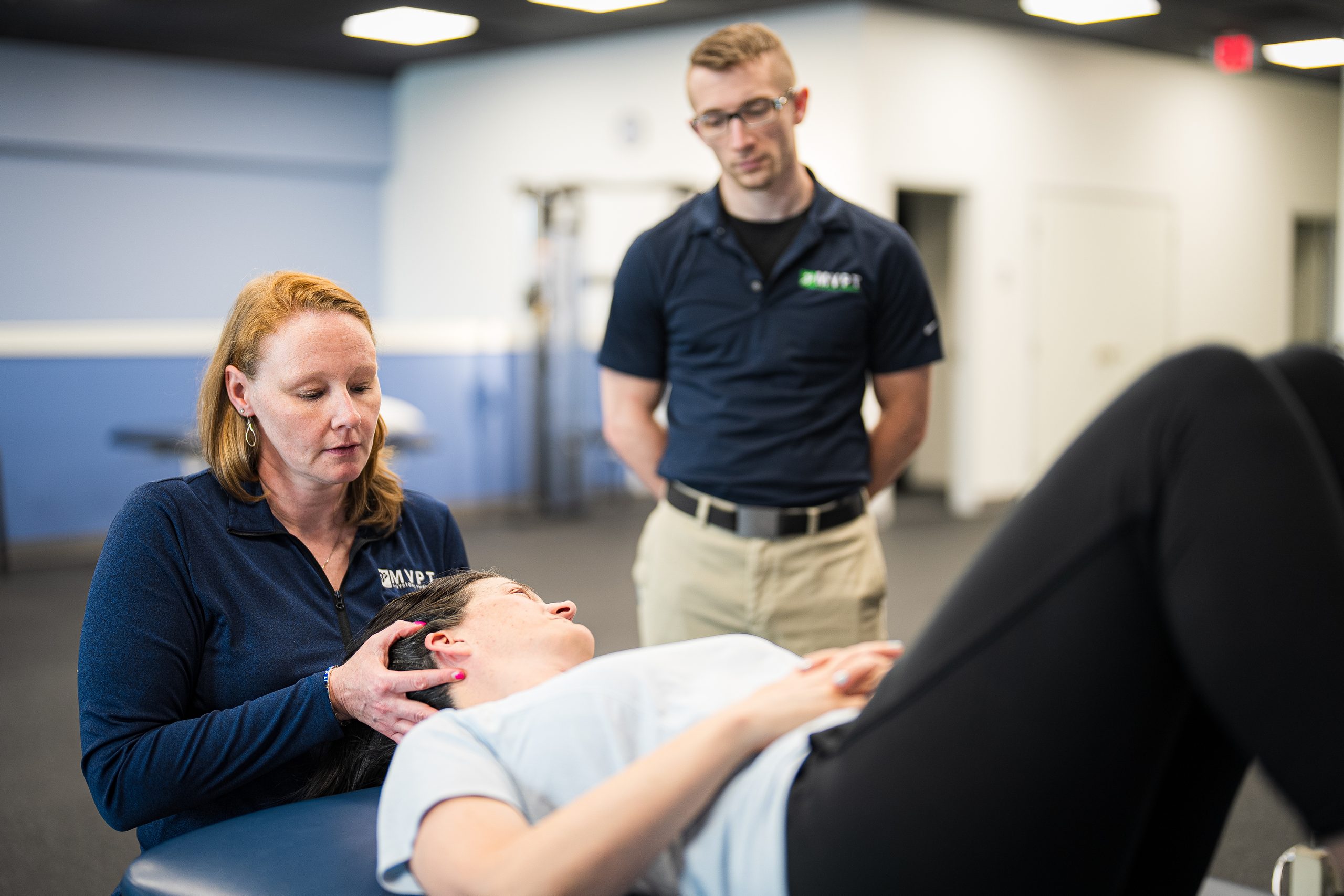


Physical therapy can be especially valuable when headaches or migraines occur with neck pain, tightness, weakness, or difficulty moving comfortably.
Your MVPT physical therapist will begin by listening to your history and learning how the symptoms affect your day. The evaluation may include neck, shoulder, and upper-back movement, strength, and muscle function. Your therapist will also consider the positions and activities that make symptoms better or worse.
If physical findings appear to be contributing, your plan may include hands-on treatment, exercises for mobility and strength, and changes you can apply during work or other daily activities. Your therapist can help you find a more comfortable workstation setup, adjust device habits, and add realistic movement breaks to your routine.
Physical therapy does not replace medical management for migraine. It can complement the care you receive from your physician by addressing neck symptoms and movement limitations that occur alongside your headaches or migraines.
Seek immediate medical care for a sudden, unusually severe headache or one that begins after a significant injury. A headache accompanied by confusion, fainting, fever, trouble speaking, weakness, loss of coordination, or a significant vision change also requires prompt evaluation.
Contact your healthcare provider if your headaches are new, happening more often, changing in character, or increasingly disrupting your life.
Recurring headaches and migraines can influence how you work, sleep, exercise, travel, and make plans. You should not have to keep changing your life without understanding whether treatable physical factors are part of the problem.
If headaches or migraines occur with neck pain, stiffness, muscle tension, or reduced movement, request an evaluation with MVPT Physical Therapy. Don’t suffer – find relief today for better days ahead!