







Whether it’s a nagging ache that slows you down or a lingering injury that keeps you benched, life’s challenges can feel like an uphill battle. But what if you had a trusted partner to help you rebound stronger and stay active? Physical therapy isn’t just about addressing pain—it’s about unlocking your potential to live life on your terms.
At MVPT Physical Therapy, we believe that taking the first step toward healing starts with choosing a care plan designed around you. From personalized evaluations to hands-on treatment and guided exercises, our team is here to help you make every move count. It’s time to stop sitting on the sidelines and get back in the game—healthier, stronger, and more resilient than ever.
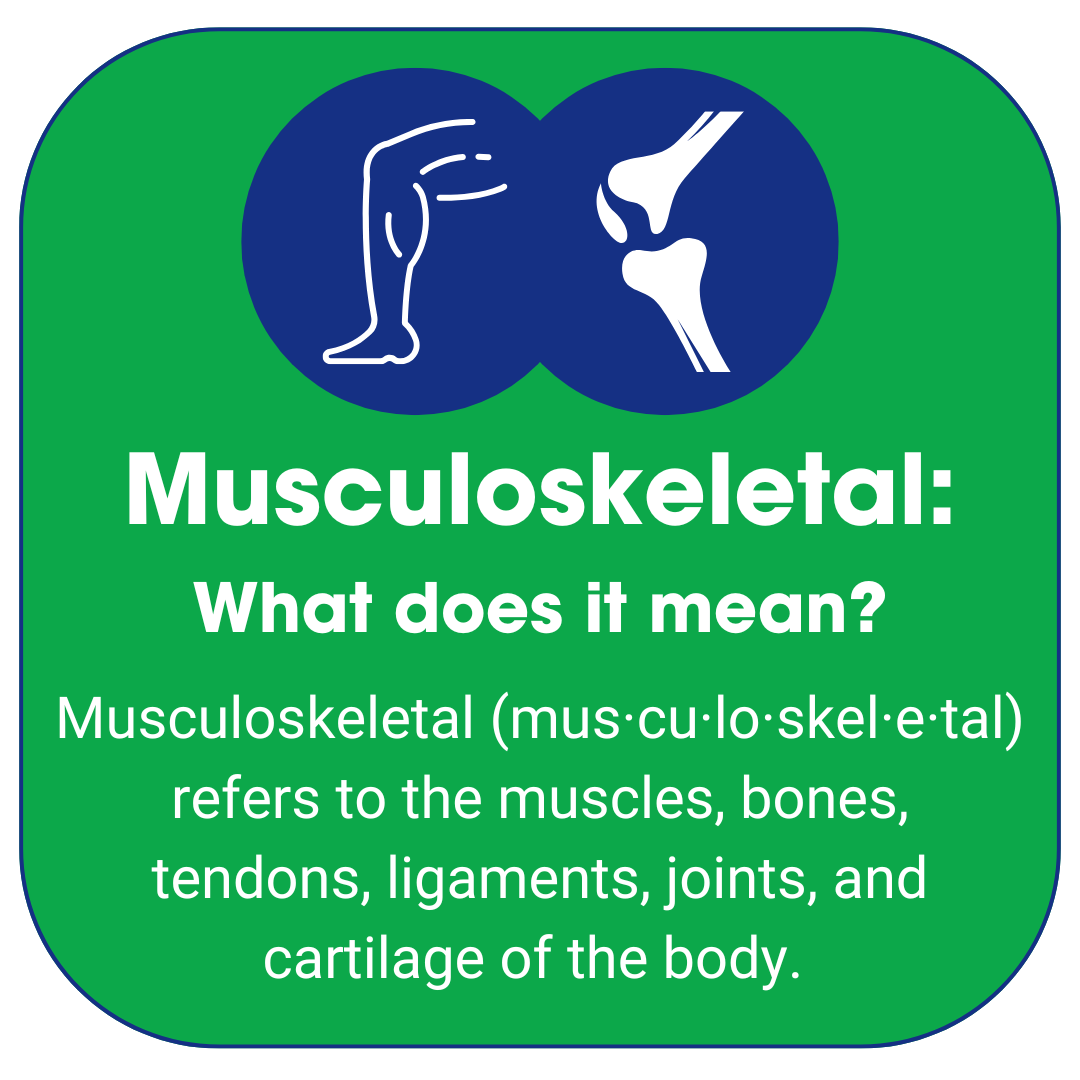
Musculoskeletal issues stemming from the neck, shoulders, and back are extremely common, with approximately 1.71 billion people worldwide suffering from a musculoskeletal injury. But treatment for these issues often comes with significant downsides, such as:
Up to 70% of U.S. adults will experience neck pain that interferes with their daily activities during their lifetime—and almost 70% of people who report shoulder pain experience it throughout their entire lives. Choosing physical therapy before seeking this more extensive medical care can help relieve pain and restore mobility while saving you valuable time, money, and hassle.
Physical therapy is more than recovery—it’s a crucial step toward an active, healthy life. Your physical therapist works with you to understand your unique challenges and goals. Through a personalized evaluation, they’ll identify the root cause of your discomfort and create a tailored plan.
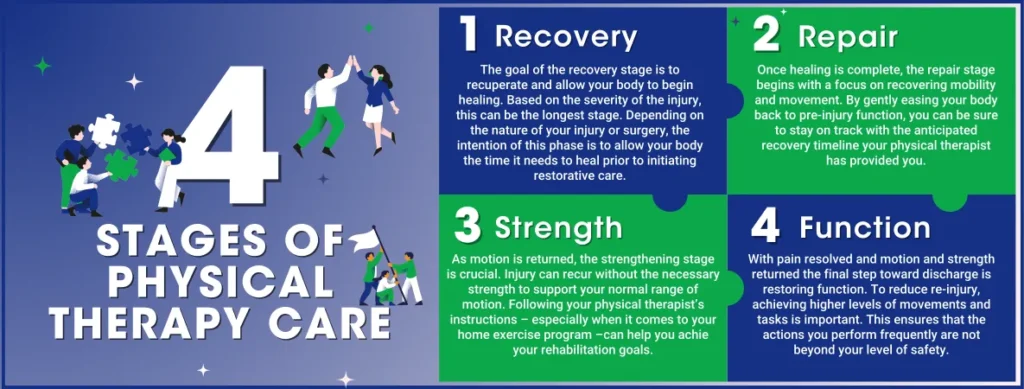
No two patients are the same, so your care will reflect your individual needs. You’ll learn what your care will include, the pace of your progress, and when it will conclude, depending on your specific condition and goals. A full course of physical therapy typically lasts about 8-10 weeks, with your therapist guiding you throughout.
Sessions may include guided exercises to build strength and mobility, hands-on treatments to ease pain, and expert advice to help you stay active and prevent future setbacks. Physical therapy not only addresses your symptoms but also gives you the knowledge and confidence to stay strong and healthy long after your sessions end.
By choosing physical therapy, you’re taking control of your health with a specialist dedicated to helping you live your best life—whether recovering from an injury, managing a chronic condition, or aiming to feel and move better, we’re here for you.
Personalized Programs
After conducting a thorough evaluation of your medical history, injury, symptoms, and daily activities, your physical therapist will identify the root cause of your pain and determine the appropriate steps for treatment. With your feedback, they will create a customized physical therapy care plan that will outline each step of your rehabilitation process.

Strength & Flexibility
Exercise is a common option used to treat persistent pain, and it’s proven to decrease inflammation, increase mobility, mobilize nervous tissue, and decrease overall pain. Taking a comprehensive look at your current health, pain levels, and ability, your physical therapist will prescribe the best stretches and exercises that specifically target and mitigate your pain for short-term and long-term relief.
Manual Therapy
Staying up to date on the latest industry innovations and best practices, physical therapists can use hands-on manual therapy and joint mobilization techniques, dry needling, and other strategies to ease pain, reduce swelling, and encourage healthy movement.
Discharge Plan to Maintain Function & Well-being
The final piece of your care is your discharge plan. All the hard work you’ve put into your rehabilitation has brought you to your discharge. Just like any exercise program, when you stop your home exercise plan, you risk a decrease in strength and function. So, like your physical therapist tells you, to maintain the best outcomes for your injury, keep up those exercises!
Your physical therapy care plan is a roadmap from your first appointment to your discharge appointment, giving you the tools you need to achieve your rehab goals and maintain your condition in the weeks and months ahead.

It can be difficult to understand whether your pain or injury requires the expertise of a specialist. We can help with that, too. Your physical therapist has the advanced training needed to screen your pain. With your health as the #1 priority, they will help explain what their findings reveal and will do so in a way that you understand completely.
If your condition requires further medical attention, they’ll refer you to a trusted specialist. But their work doesn’t stop there. They’ll continue to coordinate with your specialist to keep up to date on your condition. Based on your progress, if rehabilitation is needed at a later time, they will be ready and waiting for you, working with your full healthcare team to ensure you get the best outcomes possible.
When you choose physical therapy, you can experience pain relief, gain an understanding of your unique injury diagnosis, and find a partner in health for the years ahead. With physical therapy, you’ll experience a true partnership. A licensed medical professional that works with you to create a customized recovery plan for long-lasting relief. We’ve listed the many benefits of choosing physical therapy—now it’s time to take action so you can experience the value it can bring to your life. Schedule your evaluation at MVPT Physical Therapy today!



Over 45 million Americans suffer from headaches, making it the 3rd most common disease in the world, impacting 1 out of 7 people. While there are many different “triggers” such as alcohol, chocolate, scents, and other factors that cause headaches and migraines, most people who suffer from chronic or recurring headaches have underlying neck problems that contribute to their headaches.

According to Stanford Health Care, some of the common types of headaches include:
Regardless of the type of headache, waking up with pain can interfere with your day no matter what is on your calendar. Furthermore, while many of us are comfortable relying on pain medication to deal with the symptoms of a migraine or headache, there are other options to get to the root cause of your pain.
Physical therapy treatments are designed to help the body function at its peak. No matter how old you are or the frequency with which you have them, dealing with frequent headaches can be incredibly frustrating, but physical therapy can offer relief.

Headaches and migraines are often associated with myofascial trigger points (tight and tender points in a muscle) and muscle spasms in the neck, shoulders, and upper back. Many headaches can be triggered by physical and/or emotional stress resulting in tension headaches. Tension headaches can be very painful and debilitating and can possibly trigger migraine headaches.
Visiting a physical therapist is an excellent alternative to traditional medication management of headaches. You can decrease the intensity, frequency, and duration of headaches with the help of MVPT Physical Therapy.
Here are four ways physical therapy can reduce headache pain:
Importance of Exercise
Studies have shown that increasing your activity levels can decrease pain and inflammation. Physical therapy also improves your range of motion as well as joint health and promotes overall health.

Education on Triggers
Physical therapists want their patients to understand the triggers that contribute to their headaches, such as poor posture, eye strain, and even sleeping in the wrong position. Recognizing these triggers can help patients prevent as many painful headaches as possible.
Hands-on Care
Physical therapists provide hands-on treatment techniques designed to increase the mobility of your head and neck, decrease muscle tension and spasms, and improve posture. If additional modalities are needed, such as dry needling, your physical therapist will make a recommendation to help you get the most out of your therapy sessions.
Focus On Posture
Do you spend a lot of time staring at a screen or driving in a car? Do you have a forward head or rounded shoulders? If so, your upper cervical spine may be causing pinching of nerves. Therefore, one aspect of care your physical therapist may implement includes correcting your posture and addressing tight pectoral muscles or weakened upper back muscles.
Cut through the fog of your headaches with help from MVPT Physical Therapy! Your physical therapist will help get to the root cause of your pain and empower you to take control of your headaches to live a life full of motion. To schedule an appointment, contact your nearest MVPT Physical Therapy office, or click the button below to request an appointment.


Did you know that headaches and neck pain are often connected? Many types of headaches, especially tension and cervicogenic headaches, stem from tightness and dysfunction in the muscles and joints of the neck and upper back. When these areas become stiff or strained, they can trigger or worsen headache pain.
The good news? Targeted neck exercises can do more than relieve neck pain—they can also reduce the frequency and intensity of headaches by improving posture, restoring mobility, and easing muscle tension.

Brittany L., PT, DPT, CSCS, the Clinic Manager at our Bay State Physical Therapy – Halifax clinic, is here to guide you. Brittany treats many patients dealing with both neck pain and headaches and has advanced training in concussion evaluation and treatment. As an ImPACT Concussion-trained and certified specialist, she provides expert care for patients seeking relief and improved function.
This month’s exercises focus on strengthening and stretching the neck and upper back, helping you address both neck and headache pain with a proactive approach. Incorporating these movements into your daily routine can support your long-term health goals and empower you to take control of your pain.


If you suffer from neck pain or headaches, working with a physical therapist can help. Choose PT First for neck pain relief and call your nearest MVPT Physical Therapy location to get started today!



The injury cycle is pretty predictable. You get injured, are in pain, and wait to see if it improves. Then, when it doesn’t get better, you call your doctor to schedule an appointment. Days, weeks, or months later, you are seen by your provider. Your doctor wants you to have X-rays or an MRI before seeing a specialist for your pain — just to rule out something serious. This means more waiting. While you wait, the pain continues, so you’re given pain medications to help you manage your pain until that specialist can see you. What other choice do you have?
Ask your primary care provider about trying Physical Therapy First!
In musculoskeletal (MSK) care, Physical Therapy First (or PT First) is a proven path to pain relief and recovery. A PT First approach means that you ask for and receive physical therapy shortly after your injury or pain begins.
Physical therapists are highly trained medical professionals who provide evidence-based treatment that immediately addresses your symptoms (like pain or restricted mobility) and the underlying cause of your discomfort (such as an underlying nerve irritation).
PT First differs from the ‘old-fashioned’ approach, where you first see your primary care provider (PCP), who then prescribes pain medications or steroids, refers you for diagnostic tests, and then steers you to a consultation with a specialist. PT First means your PCP sends you directly to a physical therapist, a musculoskeletal expert, who delivers natural pain management, education, and self-care tools such as pain relief products you can have right in your home to help you recover sooner.
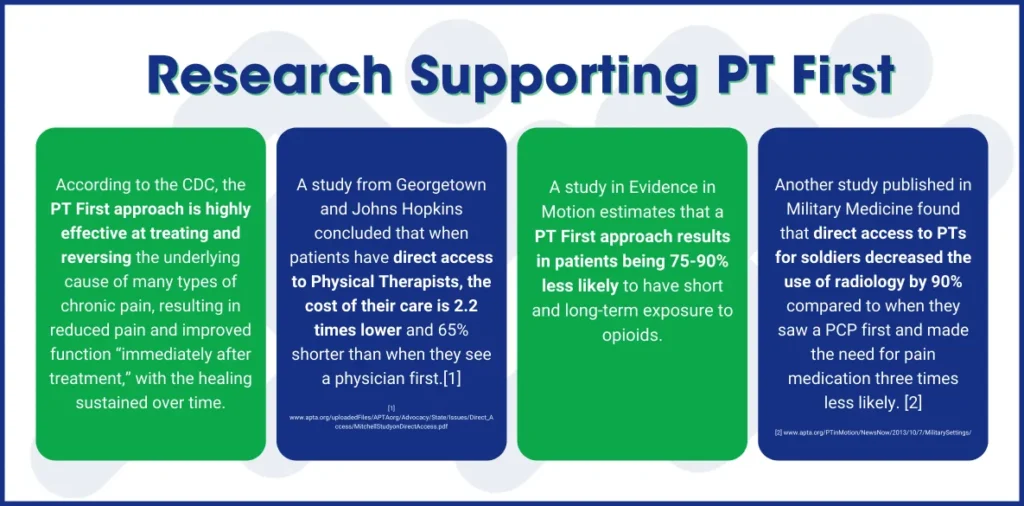
As we all know, scheduling medical appointments has challenges and requires time and patience. And access to doctors is only getting more limited, increasing the time you have to wait to be seen. With musculoskeletal injuries such as sprains and strains, time is the big enemy. Injuries like these worsen with time because when pain increases, motion and strength decrease. At worst, your injury can get so aggravated that surgery—once avoidable— becomes the only course of action.
As your partner in care, we work closely with your primary care provider and update them on your progress. Your physical therapist is an extension of your primary care provider. This ensures you receive the best care at every stage of your recovery. Your physical therapist will be the first to refer you back to your doctor if your injury requires sophisticated imaging or the expertise of a specialty physician.

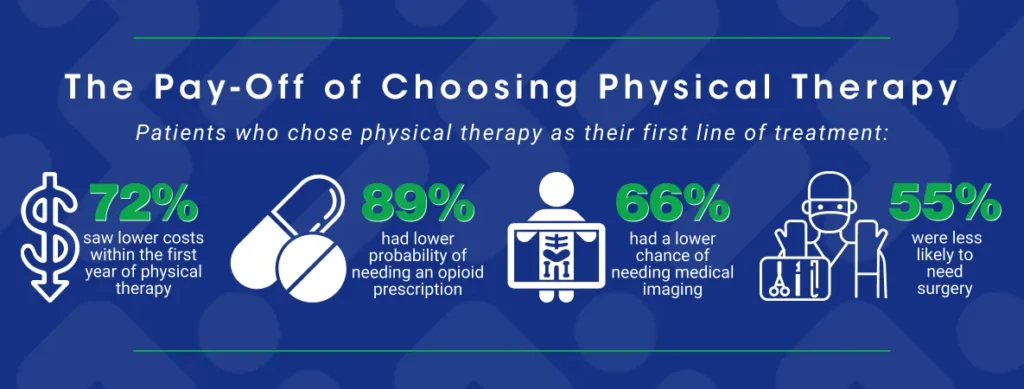
Physical therapists are important members of your healthcare team. In fact, when you partner with a physical therapist, YOU become the central and most important member of your healthcare team. When you access PT First, you begin care sooner, have lower healthcare costs, avoid or limit the use of pain medications, and are happier with the medical care you receive.
At MVPT, we partner with you, working together to address the physical limitations that keep you from reaching optimal health. And the care we provide can be most effective when you access our services immediately, at the onset of symptoms — even when it’s only mild discomfort.
For us, that’s patient care at its best- when you have the tools to recover quickly and return to a life full of motion. Choose health by calling your nearest MVPT Physical Therapy clinic or clicking the button below to request an appointment.