
Trigger Point Therapy
What is trigger point therapy?
Trigger point therapy, often referred to as myofascial release or pressure point massage, involves the application of gentle yet firm pressure to specific areas along the body, known as pressure or trigger points. This pressure is provided by the hands of our skilled physical therapists trained in pressure point release. Sometimes, a therapist may choose to use certain devices or tools to assist with force application.
The manual pressure provided by our physical therapists during trigger point therapy is intended to relax and normalize trigger points within the fascia, a widespread, sheath-like, fibrous tissue encasing your musculoskeletal structures. Fascia, which is normally pliant and flexible, is important for protecting muscles, tendons, ligaments, bones, and nerves and helps them move together in a coordinated way. However, when stress, injury, poor posture, repetitive movement, or poor nutrition or hydration is imposed on the body, the fascia can become inelastic and stiff. This restricts the normal movement of the connective tissues beneath, leading to pain, immobility, and even an increased risk of injury.
To this end, trigger point therapy is intended to “release” the tension and stress in the fascia and other structures within targeted treatment areas, thus restoring normal movement, relieving pain, and reducing your risk of further tissue damage.
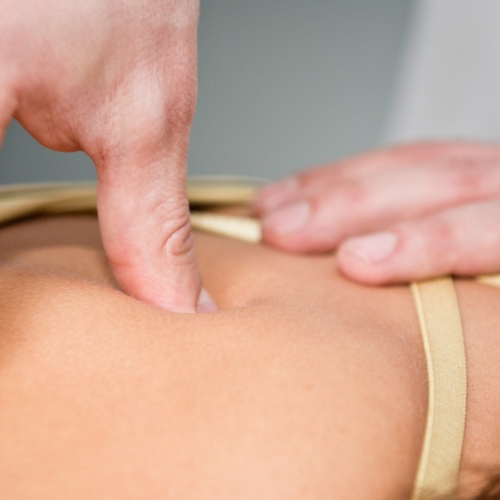
What and where are trigger points?
You probably know what a knot feels like: an area that feels uncomfortable, stiff, dense, and maybe even tender. Indeed, “knots” are essentially synonymous with trigger points, although they may not always be overtly obvious or noticeable.
Trigger points can happen anywhere in the body and are especially common in the shoulders, back, and hips. As mentioned, the connective tissue within these areas exhibit increased tension and stiffness, often as a result of stress, illness, or injury. Muscle fibers may tense up in spasms and there may be a decrease in oxygenated blood or lymphatic flow to the area, as well, all of which can contribute to localized stiffness and discomfort.
Interestingly, trigger point pain can often be referred from other parts of the body. A buildup of scar tissue or a joint misalignment, for instance, may lead to pain or spasm in a nearby muscle. This is one of the reasons why it is so important to consult with one of our physical therapists if you’re you are struggling with pressure point pain, since there may be more to the symptoms than meets the eye.
What conditions may benefit from trigger point therapy?
Fascial tissue is located throughout your body, so adhesions and activated trigger points anywhere within this tissue can affect a wide number of physiological systems and structures. Our physical therapy team has found myofascial release to be effective for numerous conditions, including:
- Sciatica
- Carpal tunnel syndrome
- Medial and lateral epicondylitis (golfer’s elbow and tennis elbow, respectively)
- Whiplash
- Osteoarthritis
- Adhesive capsulitis (frozen shoulder)
- Headaches and migraines
- Neck pain
- Back pain
- Thoracic outlet syndrome
- Temporo-Mandibular Joint (TMJ) disorder
Frequently Asked Questions About Trigger Point Therapy
A tender area does not necessarily mean your muscle is damaged or literally tied in a knot. Your MVPT physical therapist can assess your symptoms along with your mobility, strength, movement, and activity demands. Your physical therapy expert can then develop an individualized plan of care around the factors most relevant to what you are experiencing.
Your expert provider at MVPT Physical Therapy may recommend this treatment if muscle sensitivity makes movement or exercise more difficult. Hands-on treatment is generally one part of your care plan rather than the endpoint. Your MVPT physical therapist can also address weakness, limited mobility, repetitive activity, or other physical factors that may be contributing to your symptoms.
Your MVPT physical therapist will also look at why the tightness keeps occurring. Repetitive activity, prolonged positions, increased physical demands, weakness, or limited mobility may all play a role. Your custom-tailored plan of care can use hands-on treatment when helpful while also addressing the physical abilities you need to build for your daily activities.
Tell your physical therapist at MVPT how the treatment feels. Your physical therapist can change the pressure, modify the technique, or stop treatment if needed. Your feedback makes care a collaborative process and helps your physical therapy partner at MVPT Physical Therapy select an approach that supports your goals without creating unnecessary discomfort.
Your physical therapist at MVPT Physical Therapy will determine which physical limitations are relevant to your symptoms. Your individualized plan of care may include mobility work when movement is restricted and progressive strengthening when weakness or reduced capacity needs attention. Trigger point treatment may help reduce sensitivity for some patients, but your care should focus on the combination of treatments that helps you return to the activities that matter to you.
Your MVPT physical therapist can evaluate these factors and help determine which ones your plan of care should address. Strengthening, mobility work, activity changes, and hands-on treatment may all have a role. Building your ability to tolerate the demands of your normal routine can help you make more meaningful progress than repeatedly treating the same sensitive area.
How should I prepare for trigger point therapy?
To maximize the effectiveness of our care, our physical therapist team encourages you to wear comfortable clothing and sturdy supportive shoes—essentially, anything you would be comfortable working out in. Of course, while much of our physical therapy services do involve active participation from you as the patient, manual therapy sessions (which can include trigger point therapy) allow you to take more of a passive, restorative role.
Know that when you first arrive for your initial evaluation, one of our physical therapists will take you through a thorough patient health history and physical examination. You will be encouraged to ask questions along the way to help us gain insight into your unique condition and help us provide you with an accurate diagnosis and plan of care. Your individualized plan of care may include manual therapy, as well as additional evidence-based physical therapy services such as therapeutic exercises, joint mobilizations, and modalities.
We always encourage our patients to stay well-hydrated both before, during, and after treatment. Water is essential to helping your body heal, and the effects of both active and passive therapeutic services, including trigger point therapy, are amplified when you drink plenty of fluids. Aim for one third to one half your body weight in fluid ounces per day, or more if you exercise a lot or have a physically demanding job.
Are you struggling with acute or chronic pain? Call MVPT today to learn more about trigger point therapy and other drug-free and non-invasive techniques. We are happy to connect you with one of our physical therapists who can help you start feeling better as soon as possible.